Types of Spilled Oil and Their Impact on the Water Column
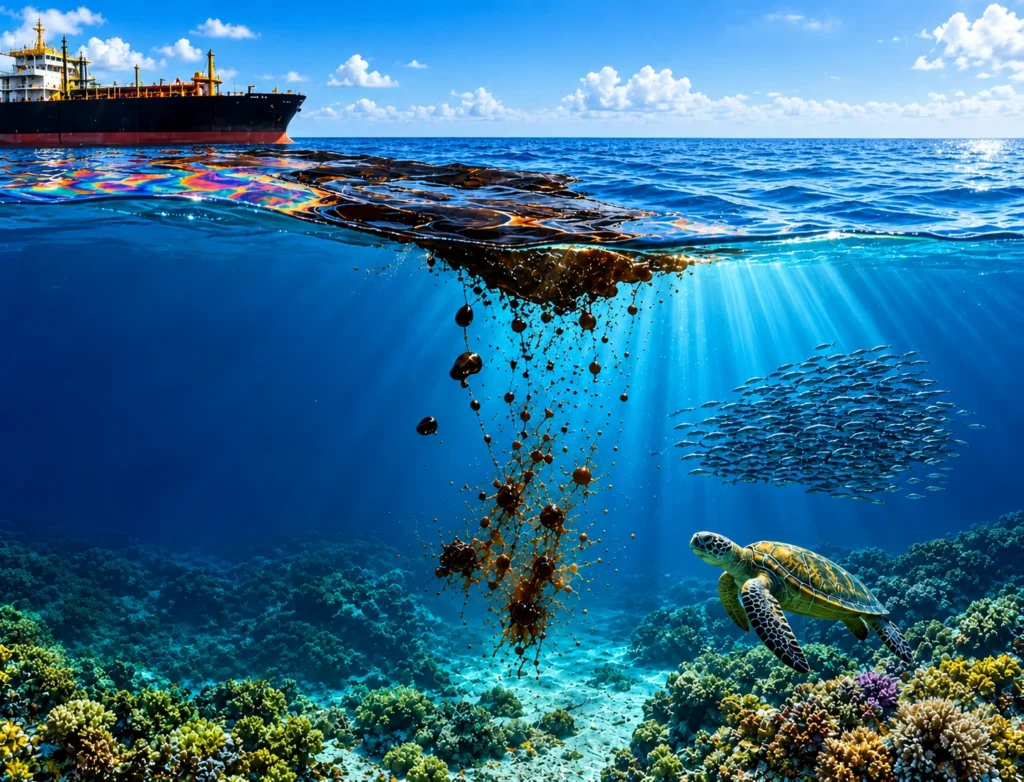
When a hydrocarbon spill occurs in the marine environment, the operational response and the level of ecological damage do not depend solely on the volume spilled. The physical and chemical properties of the spilled material determine how it interacts with the water, at what depth it moves, and what containment and removal strategies must be deployed.
In environmental emergency management and remediation services, understanding the dynamics of each type of hydrocarbon in the water column is crucial to mitigating risks and implementing effective solutions.
Ultimately, integrating sound scientific knowledge of oil behavior into emergency response protocols ensures faster containment, higher recovery rates, and a significantly reduced ecological footprint.
The Behavior of Hydrocarbons According to Their Classification
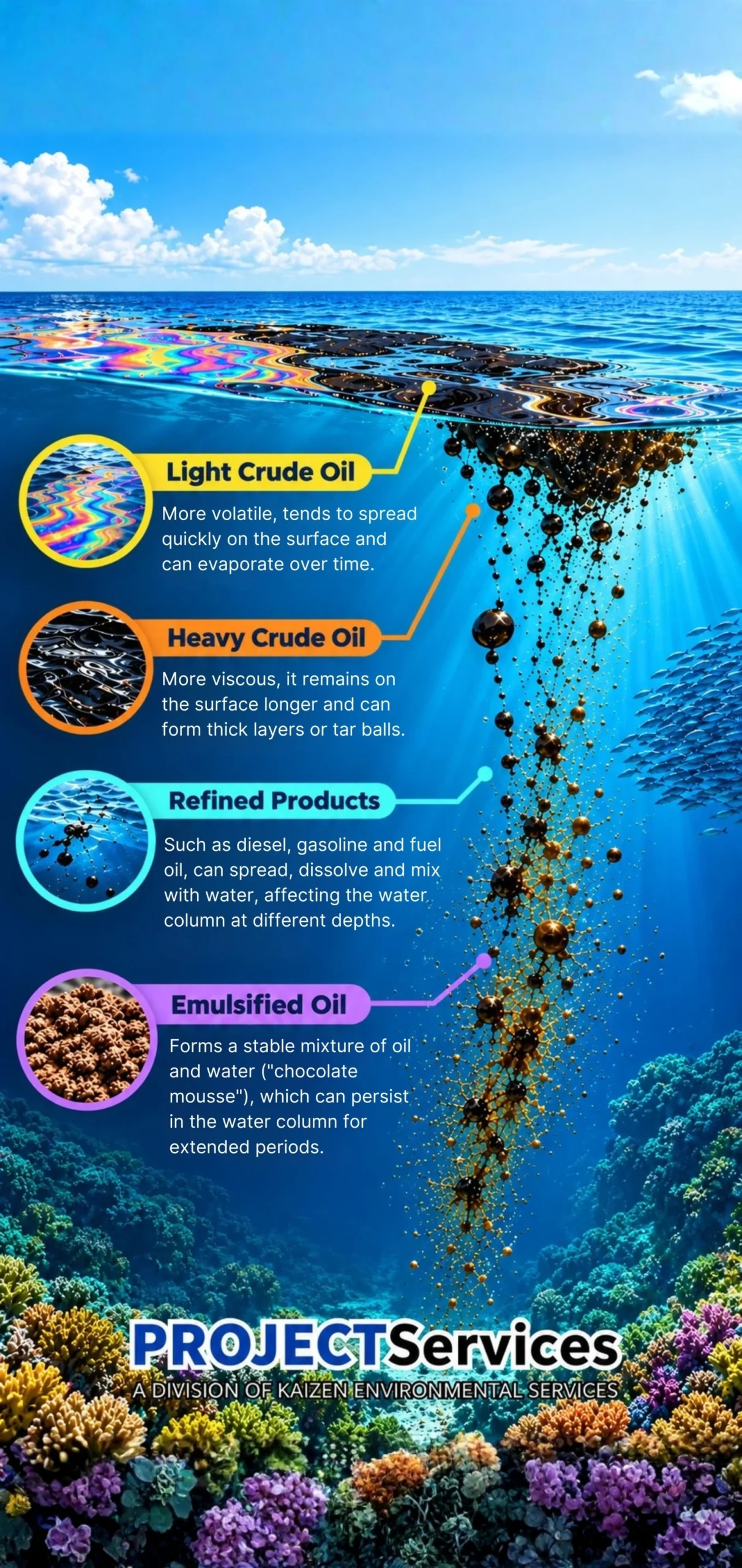
Not all oils and their derivatives act the same way when they come into contact with the sea. Their viscosity, density, and degree of volatility make all the difference in their environmental trajectory:
1. Light Crude Oil
Due to its low density, this type of crude tends to spread rapidly over the sea surface, forming thin layers (slicks). Although a significant portion evaporates within the first few hours, it contains a high proportion of volatile aromatic compounds that generate immediate acute toxicity for surface fauna, seabirds, and organisms in the intertidal zone.
2. Heavy Crude Oil
Unlike light crudes, heavy oil has a high viscosity that hinders its natural dispersion. It forms dense masses and emulsions that can persist for weeks or months in the water. Its low evaporation rate increases the risk of smothering marine life and drastically complicates mechanical recovery efforts.
3. Refined Fuels (Diesel, Gasoline, Kerosene)
Refined products usually disperse at high speeds through the water column. While they do not form persistent patches like heavy crude, their penetration into the aquatic column represents a serious chemical threat. Their components easily penetrate the tissues of fish and invertebrates, being especially lethal during early developmental stages (eggs, larvae, and fry).
4. Heavy Fuels and Residual Oils (Bunker C)
These are highly persistent materials. When mixed with sediments and suspended particles, their density increases until they sink, accumulating on the seabed. This shifts the environmental impact from the surface to benthic ecosystems (seabeds and reefs), causing long-term deterioration in the underwater habitat.
5. Biodegradable Oils and Lubricants
Although designed to break down faster through natural microbiological processes, biodegradable does not mean harmless. During their degradation process, these oils can consume large amounts of dissolved oxygen in the water, creating temporary anoxic zones that affect the respiration of local species.