Key Successes
Protecting Tobago’s Coastline: Kaizen’s Strategic Response to the 2024 Oil Spill
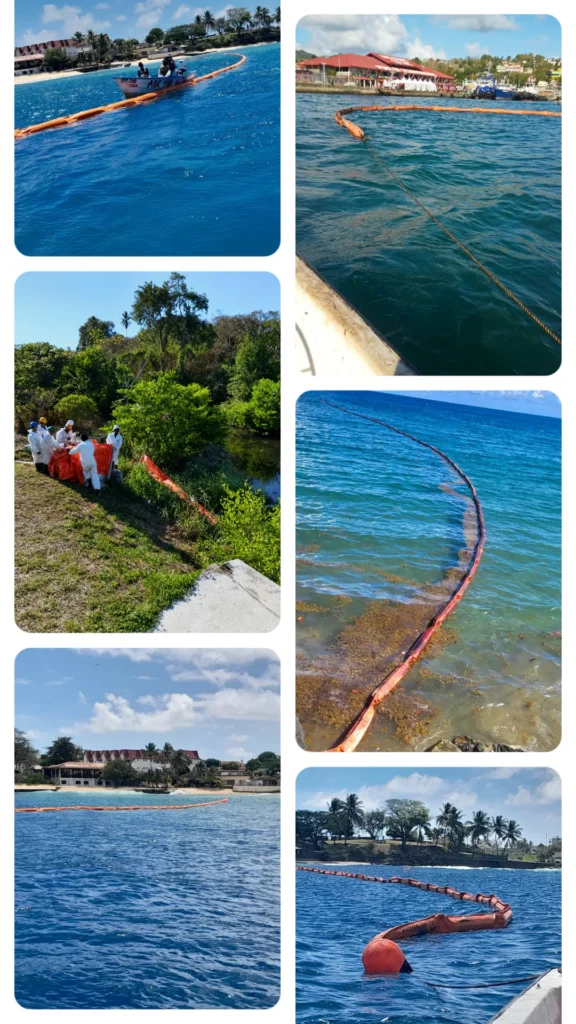
The 2024 Tobago oil spill began on February 7, 2024, when the barge Gulfstream capsized off the south coast of Tobago, releasing a significant quantity of oil into the surrounding marine environment. The incident quickly escalated into one of the country’s most serious recent environmental emergencies, threatening coastal ecosystems, fisheries, tourism assets, and nearby communities.
In the immediate aftermath, national and regional response mechanisms were activated under the leadership of the Tobago Emergency Management Agency (TEMA), which served as the primary coordinating body. The response required close collaboration with divisions of the Tobago House of Assembly (THA), particularly those responsible for environmental management, infrastructure, and public health, as well as support from the Trinidad and Tobago Coast Guard, non-governmental organizations, and community volunteers.
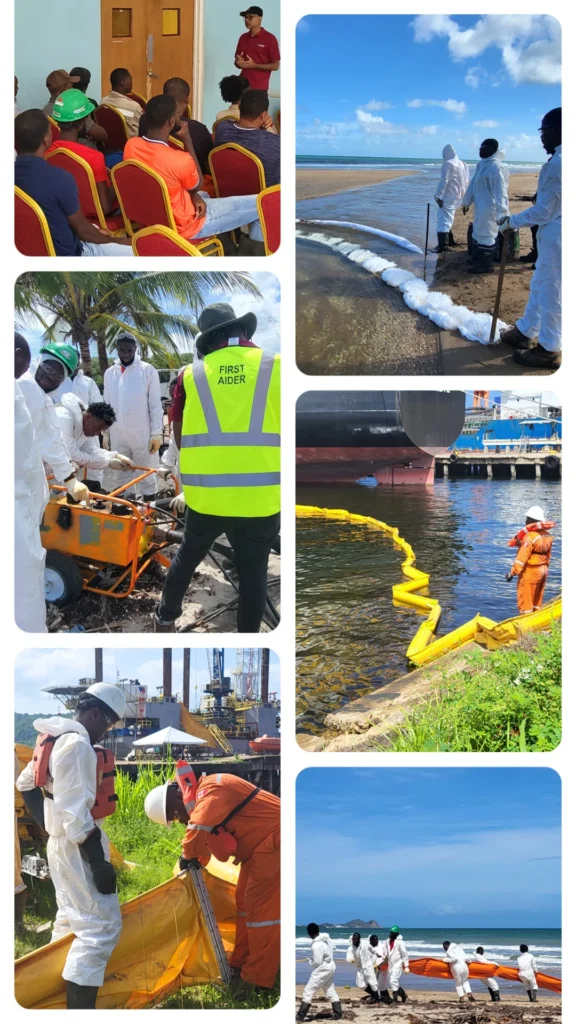
Kaizen Environmental Services (Trinidad) Limited mobilized rapidly, deploying trained personnel, specialized equipment, and logistical support from Trinidad to Tobago. Operating within the structured, multi-agency response framework, Kaizen integrated its operations with national authorities and partner organizations to ensure an effective and coordinated cleanup effort.
Kaizen’s teams were heavily engaged in frontline response activities. A critical early priority involved the strategic deployment of containment booms to limit the spread of oil slicks and to protect environmentally sensitive and economically important coastal zones, including mangroves, fishing areas, and shorelines. These efforts were complemented by on-water recovery operations, shoreline assessment and cleanup, and continuous monitoring to adapt to changing conditions at sea.
Through coordinated action, rapid mobilization, and sustained field operations, Kaizen Environmental Services contributed significantly to mitigating the environmental impact of the spill and supporting Tobago’s broader recovery efforts.





Spill Response Training and Emergency Preparedness Operations in Trinidad and Tobago
Kaizen Environmental Services (Trinidad) Limited has played a key role in strengthening national oil spill preparedness through the execution of specialized training programs and simulated response exercises across Trinidad and Tobago. These initiatives were designed to enhance the capabilities of both community stakeholders and industrial operators, ensuring a coordinated and effective response to potential environmental emergencies.
A significant component of this effort was the delivery of spill responder training for residents and fisherfolk in Guayaguayare. This program combined theoretical instruction at the Guayaguayare Community Centre with practical field exercises conducted at the Pilote River and Guayaguayare Beach. Participants were trained in critical response techniques, including the deployment of shoreline containment booms, the use of sorbent materials to protect sensitive river mouths, and the operation of specialized equipment such as skimmers and oil recovery systems. This hands-on approach empowered local communities with the knowledge and tools necessary to act as first responders in the event of a spill.
In addition to community engagement, Kaizen led a comprehensive spill response simulation at the CARIDOC facility in Chaguaramas. The exercise replicated a realistic scenario involving a diesel spill during ship repair operations, requiring rapid mobilization and coordinated action. Key activities included the deployment of ocean containment booms from spill response trailers, the establishment of temporary oil storage systems, and the use of marine vessels to support offshore containment efforts. These simulations are critical for testing operational readiness and refining response strategies under controlled conditions.
Through these integrated training and response initiatives, Kaizen continues to demonstrate its leadership in environmental protection, emergency preparedness, and capacity building. By bridging technical expertise with community involvement and industry collaboration, the company reinforces its commitment to safeguarding coastal and marine ecosystems while supporting national resilience against environmental risks.